

Hunting Jacket Customization: Functional Details That Win End‑Customer Loyalty
August 24, 2026
A customer steps into the woods before sunrise. The wind is strong, the ground is wet, and the temperature keeps falling. After several hours, a hood that will not stay in place, noisy fabric, difficult pockets, or trapped moisture can turn a promising hunting jacket into a disappointing purchase.
For B2B buyers, customer loyalty is often decided by these small functional details. A successful hunting jacket must do more than look technical. It should support movement, protect against changing weather, organize essential items, and remain comfortable through repeated use.
Start with the Hunting Scenario
“Hunting jacket” is a broad category. A jacket designed for stationary hunting in cold weather will have different requirements from one used for hiking, tracking, or active outdoor movement.
Before choosing fabrics and trims, define the main customer scenario:
-
Will the wearer spend most of the time sitting, walking, or climbing?
-
Is the target climate cold and dry, wet and windy, or variable?
-
Will the jacket be worn over a base layer and fleece?
-
Will the wearer carry a backpack, binoculars, radio, or other equipment?
-
Is low-noise movement more important than maximum abrasion resistance?
These answers influence fabric weight, lining, stretch level, pocket position, hood construction, and overall fit.
Weather Protection Is a Complete System
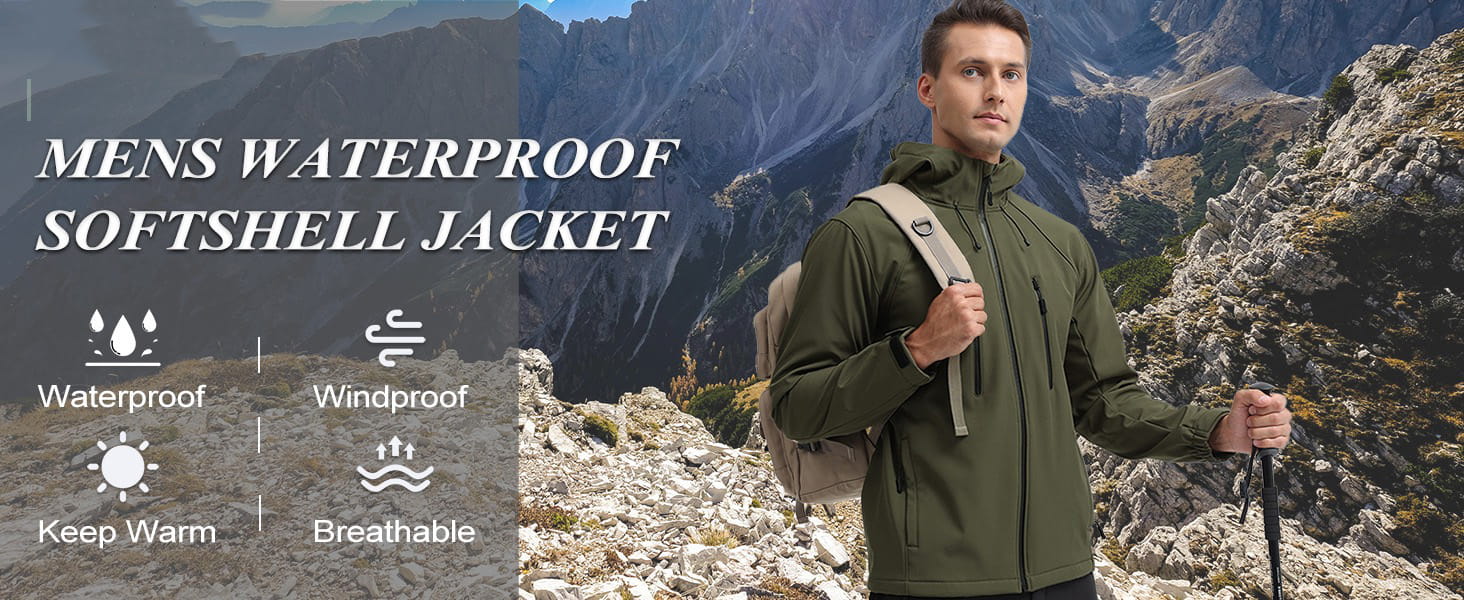
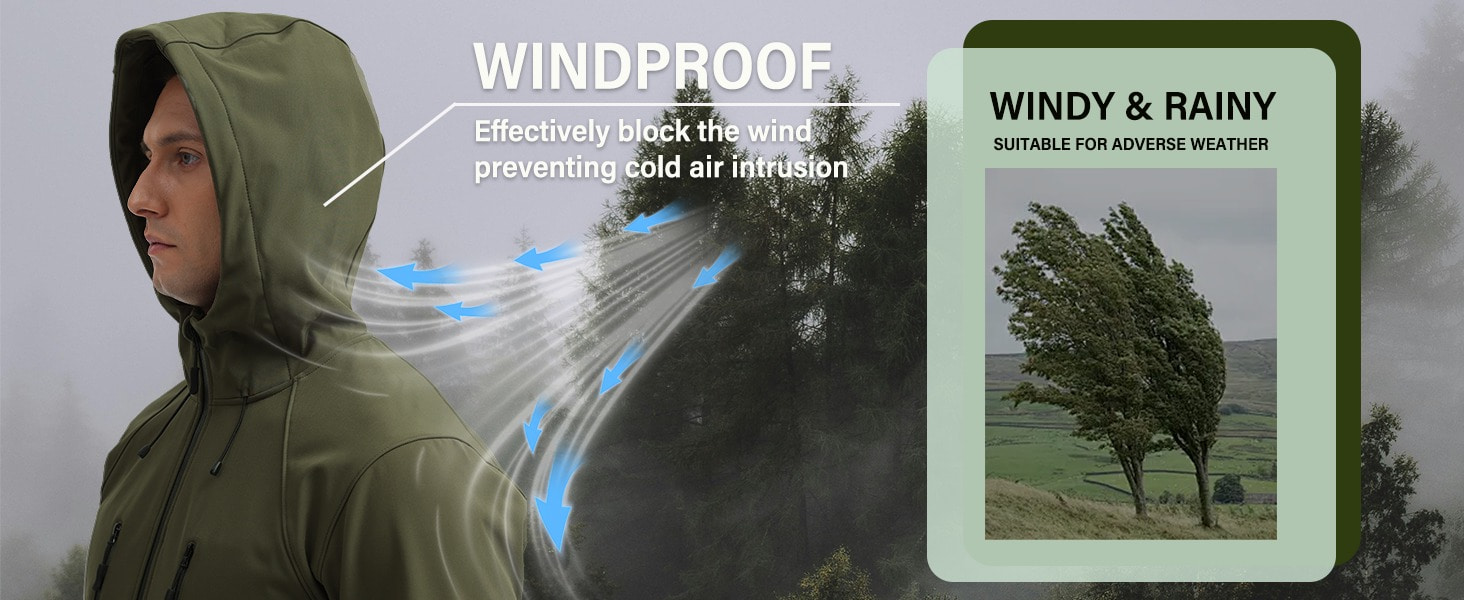
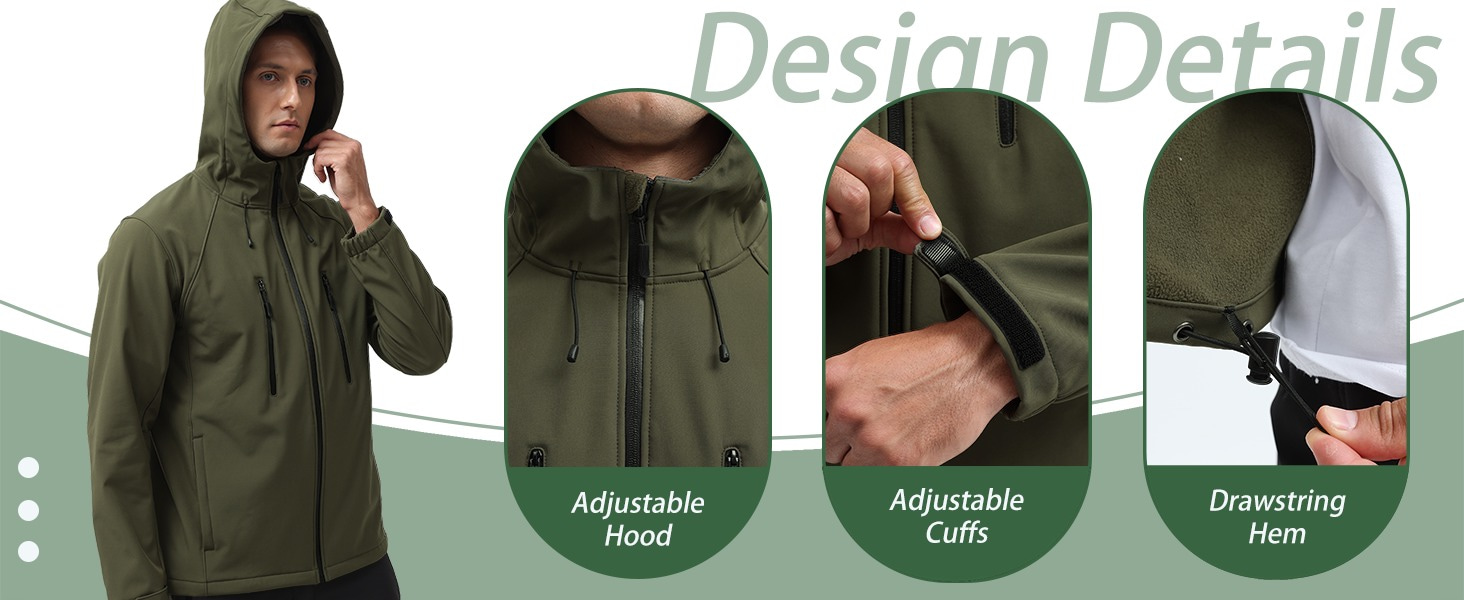
The supplied reference images show a modern softshell-style direction with a hood, zippered pockets, adjustable cuffs, and a drawcord hem. These design details can help reduce wind entry and improve comfort, but weather protection does not come from the face fabric alone.
A finished hunting jacket may rely on a combination of:
-
Face fabric construction
-
Coating or membrane
-
Lining or backing
-
Seam construction
-
Zipper protection
-
Hood, cuff, and hem adjustment
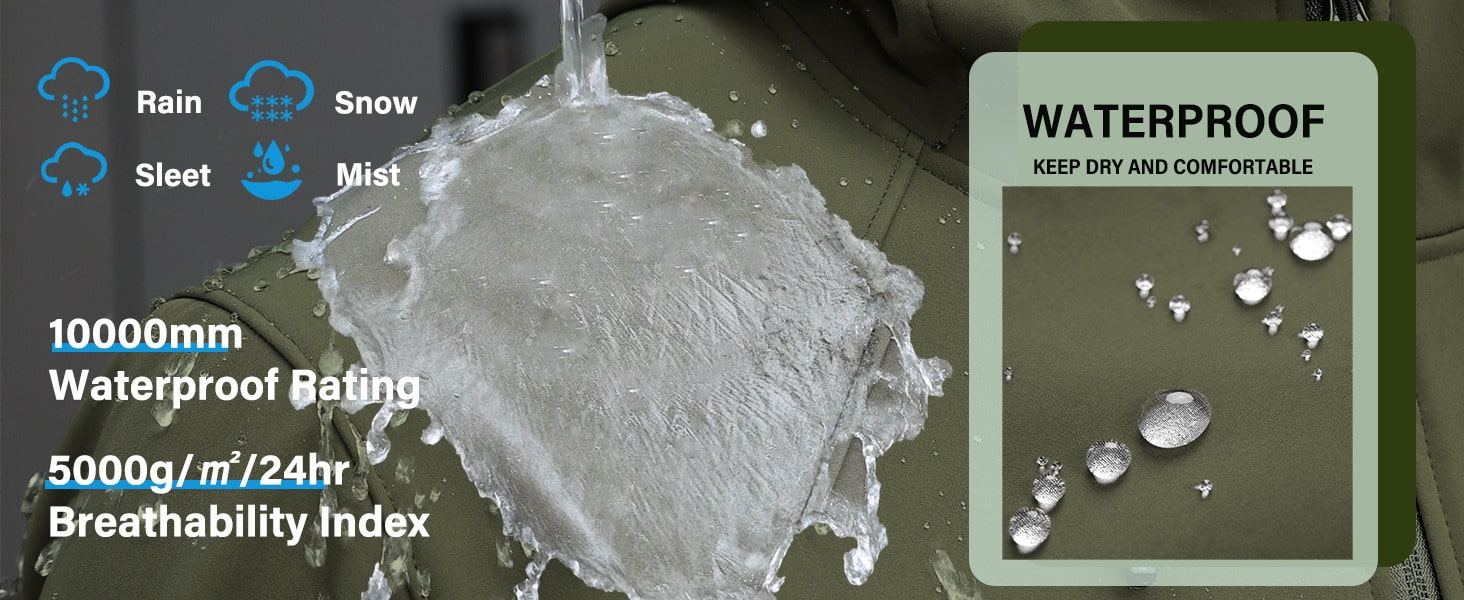
Water-resistant fabric allows water to bead on the surface, but this does not automatically mean that the finished garment is waterproof. If a product will be marketed as waterproof, buyers should request the exact hydrostatic pressure method, breathability test method, seam-sealing details, and wash-durability results.
Some product artwork may display specific waterproof or breathability figures. These numbers should not be treated as confirmed specifications until the supplier provides current laboratory reports and explains whether the results apply to the fabric or the finished jacket.
Quietness Matters in Hunting Apparel
For hunting customers, fabric noise can be just as important as water protection. A stiff or rustling outer layer may become uncomfortable during slow movement and can reduce the product’s perceived quality.
Quiet performance depends on more than fiber content. It can be affected by:
-
Fabric surface and coating
-
Fabric stiffness
-
Zippers and zipper pulls
-
Hook-and-loop fasteners
-
Pocket construction
-
Lining and seam movement
A supplier comparison should include hands-on testing in a quiet environment. Buyers can evaluate the jacket while walking, crouching, reaching, opening pockets, and wearing a backpack. Stretch recovery should also be checked after repeated movement so that elbows, shoulders, and back panels do not become loose or distorted.
Make Every Pocket Purposeful
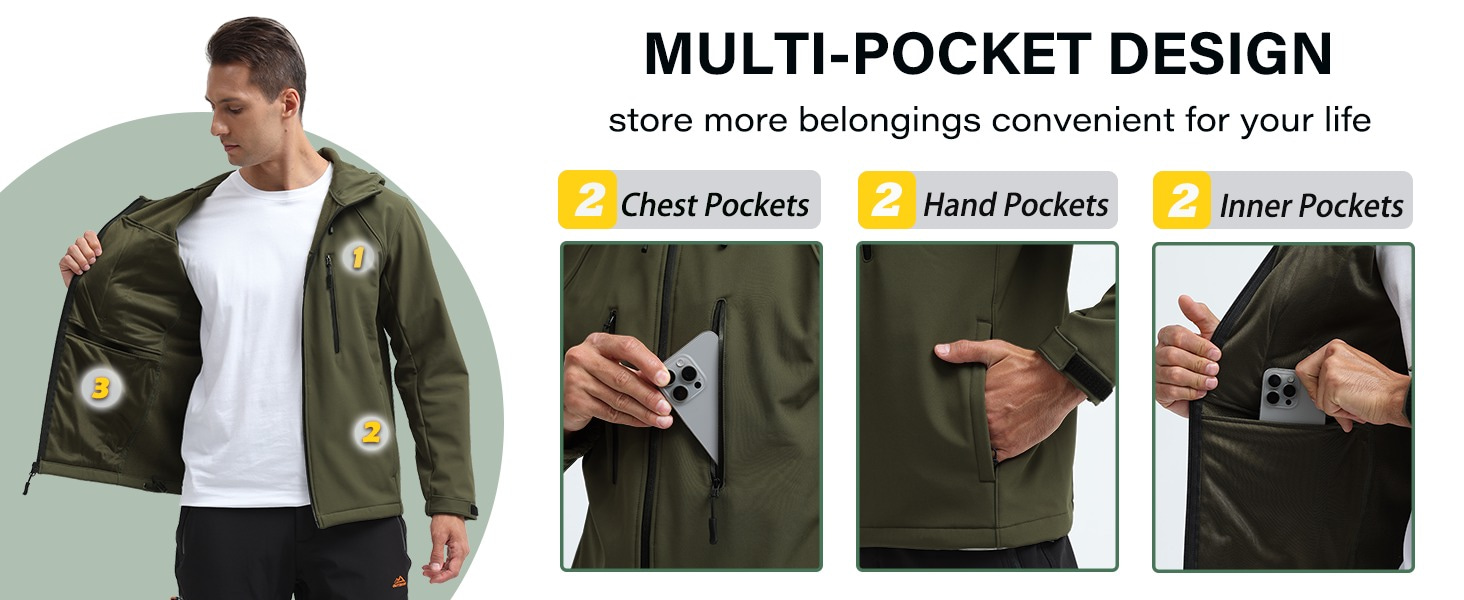
A multi-pocket layout can be valuable, but adding more pockets does not automatically create a better product.
Each pocket should have a clear function. Chest pockets may be useful for small equipment that needs quick access. Hand pockets should remain accessible when the wearer is carrying a pack or sitting. Inner pockets can protect personal items, while sleeve pockets may work for compact accessories.
Important customization points include:
-
Pocket opening angle
-
Zipper direction and puller size
-
Glove-friendly access
-
Reinforcement at stress points
-
Pocket depth and internal organization
-
Drainage where appropriate
-
Bulk created by pocket bags and lining
Pocket placement should be tested on the actual garment, not only approved on a flat technical drawing.
Hoods, Cuffs, and Hems Improve Adaptability
An adjustable hood can help customers respond to changing wind and rain. However, the hood should offer practical adjustment without blocking peripheral vision or creating loose cords that catch on equipment.
Adjustable cuffs help seal the wrist and can also accommodate gloves. A drawcord hem may reduce cold-air entry, but the cord exit and stopper should be positioned where they are easy to operate and unlikely to interfere with a backpack or belt.
A two-way zipper can improve comfort while sitting or climbing, but it also requires accurate installation and smooth operation. Buyers should check zipper alignment, slider strength, bottom-stop construction, and performance after repeated opening cycles.
Warmth and Moisture Management Must Be Balanced
A brushed or fleece backing can improve handfeel and warmth, but a warmer lining is not always better for active customers. Excess insulation may trap heat and moisture during walking or climbing.
A practical product range may include different constructions for different use scenarios:
-
Lightweight softshell jackets for active movement
-
Fleece-backed styles for cool-weather use
-
More insulated versions for stationary hunting
-
Layering-focused shells for customers who prefer modular systems
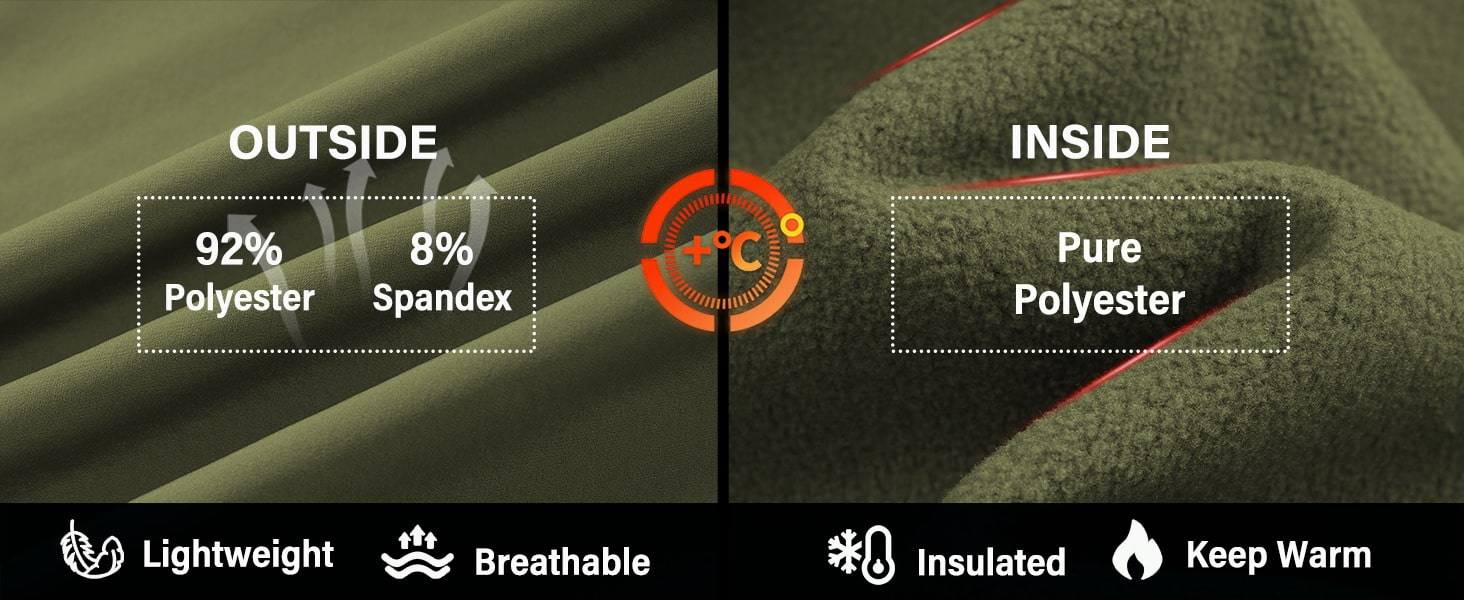
Suppliers should confirm fiber content, fabric weight, thickness, pilling resistance, dimensional stability, and moisture-management performance. A composition ratio shown in a product image should be verified through the current fabric specification and testing documentation.
Full Customization Goes Beyond Adding a Logo
For a full-custom menswear program, branding is only one part of product development. The buyer should be able to customize the garment’s functional architecture.
This may include:
-
Fabric structure, surface finish, and backing
-
Color, camouflage layout, or contrast panels
-
Hood shape and adjustment system
-
Pocket quantity, location, and internal layout
-
Zipper, cord, snap, and hook-and-loop selection
-
Sleeve articulation and movement allowance
-
Size grading and fit blocks
-
Labels, packaging, and decoration method
Decoration must also be evaluated against the fabric construction. Embroidery, heat-transfer graphics, woven patches, and printing can behave differently on stretch or coated materials. Placement should be selected to avoid reducing comfort, damaging a weather-resistant layer, or creating premature peeling after washing.
A complete technical package should include a bill of materials, graded measurements, construction details, tolerance limits, artwork files, and approved trim references. This gives the factory a repeatable production standard instead of relying on visual interpretation.
What B2B Buyers Should verify Before Bulk Production
A reliable approval process should test both the material and the finished jacket. Useful checks include:
-
Fiber content, GSM, thickness, abrasion, and pilling
-
Stretch and recovery after repeated movement
-
Water resistance, hydrostatic pressure, and breathability
-
Seam strength and zipper performance
-
Colorfastness and shade consistency
-
Dimensional stability after washing
-
Pocket and drawcord attachment strength
-
Decoration adhesion and durability
-
Country-specific labeling and chemical compliance
Testing should be performed on representative production samples whenever possible. A fabric swatch cannot fully demonstrate hood fit, pocket accessibility, seam leakage, or the comfort of the finished pattern.
Bulk consistency is equally important. Buyers should retain a signed sample, approved color standard, trim references, measurement chart, and inspection criteria. The supplier should also explain how fabric lots, coating results, garment measurements, and reorders will be controlled.
How Lasen Can Guide a Full-Custom Hunting Jacket Program
For buyers developing a private-label hunting jacket, Lasen can help translate a product idea or reference image into a production-ready specification.
The process can begin with the target customer, climate, activity level, price range, and required functional details. From there, the team can coordinate fabric and trim selection, pocket and hood development, pattern adjustment, sample fitting, decoration, testing, and production quality control.
Lasen is a company focused on fully customized menswear development, with three proprietary factories, a team of over 300 designers, and advanced garment production technology. It provides buyers with a structured pathway from concept development to mass production, while maintaining attention to fit, functionality, and consistent quality. The company is committed to becoming your brand partner.
If your customers expect a hunting jacket to remain quiet, comfortable, weather-ready, and easy to use, send Lasen your target scenario and reference design. The right customization plan can turn functional details into stronger product reviews, repeat orders, and long-term end-customer loyalty.